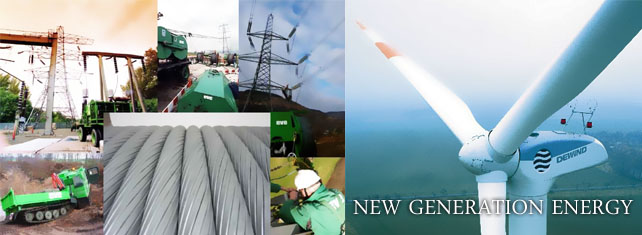
1. CTC company
CTC is a global provider of electric utility solutions featuring its breakthrough composite technologies.
CTC’s premiere product is a composite-reinforced conductor known as ACCC (Aluminum Conductor Composite Core) cable. ACCC cable has the potential to revolutionize electrical grids by offering twice the power of traditional aluminum cables, 25% stronger materials and significantly improved reliability –resulting at total cost savings.
Additional CTC products being introduced include electric line support structures such as composite utility poles and transmission towers, as well as composite wind turbine support structures.
The CTC Solution
CTC’s ACCC (Aluminum Conductor Composite Core) cable doubles the current carrying capacity over existing transmission and distribution cable and increases system reliability by virtually eliminating high-temperature sag. Its higher strength and reduced sag have several benefits. It is more reliable, since a wayward tree branch is less likely to topple cables, a frequent cause of outages; it avoids the need to build new steel towers since ACCC cables can be configured to match the original tower design. In addition, CTC’s cable offers dramatic cost savings over conventional methods. (CTC's average cost is $50,000 per kilometer, rather than $300,000 for conventional solutions). The savings are derived from not having to construct new steel towers to carry the weight of additional aluminum cables to meet always increasing demand.
ACCC advantages to conventional solutions:
- Doubles the capacity of existing T&D systems
- Resists environmental degradation
- Will not rust, corrode, or cause electrolysis with aluminum conductors or components
- Reduces line failures
- Can reduce project costs with greater distance span between transmission towers
- Lowest line sag characteristics available
- Utilization can help meet emission initiatives
- Can operate at higher temperatures – up to 200oC
- Uses standard installation procedures
2. DeWind company
DeWind was established in 1995 and since that time has delivered over 600 Wind Turbines, with a total nominal output of more than 600 MW. Early adopters of variable pitch combined with variable speed operation wind turbines were designed to obtain the maximum energy yield from the wind. The D4 was introduced in 1996 as a 500 kW turbine while later upgraded to a rating of 500 kW. Over two hundred and sixty D4s have been installed to date. In January 1999, the first D6 was commissioned and since then some two hundred and forty D6 turbines have been installed. In 2002 the first D8 2 MW turbine was installed with its distinctive Porsche designed Nacelle.
The current product range comprises three models of Wind Turbines; the D6 50 Hz with a nominal output rating of 1.25 MW; the D8 50 Hz with a nominal output rating of 2.0 MW and the D8.2 2,000kW 60/50Hz with a Synchronous generator that connects directly to the grid.
The DeWind D8.2 is an evolution of the DeWind D8 turbine. The DeWind D8.2 integrates the advanced WinDrive® hydrodynamic torque converter developed by Voith Turbo and a Cummins Synchronous enerator. The WinDrive® and generator combination is attached to the D8’s proven drive train and connects directly to the power grid at up to 13.8 kV without the use of power conversion electronics.
The first DeWind D8.2 Prototype was installed in December 2006 in Cuxhaven, Germany and commissioned in January 2007. It has received a Statement of Compliance for Design Assessment, according to Dibt Wind Zone III conditions from DEWI-OCC. The first 60 Hz demonstrator will be installed in Sweetwater, Texas at the end of 2007.
Serial production of the DeWind D8.2 will take place in the USA at the TECO Westinghouse facility in Round Rock, Texas. DeWind is leveraging TECO Westinghouse resources and experience in assembling large capital goods. The facility is fully ISO 9000 certified and will allow DeWind to assemble turbines to exacting quality standards.
|